11 March 2026
Green Mining Becomes Increasingly Relevant as Mining Companies Begin Integrating Low-Carbon Energy Solutions
Tag
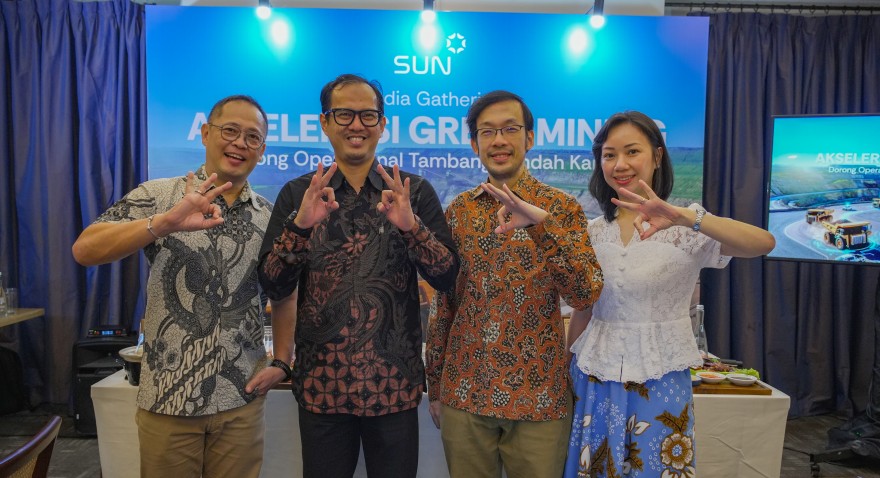
Jakarta, March 11, 2026 — The shift toward green mining practices is becoming increasingly important in Indonesia’s mining sector as global decarbonization demands intensify and national commitments to reduce emissions continue to advance. Mining companies are now encouraged to begin integrating lower-emission, more efficient, and more sustainable operational approaches in order to remain competitive amid the changing global energy landscape.
As one of the main pillars of the national economy, the mining sector contributes around 10.5% to Indonesia’s Gross Domestic Product (GDP). At the same time, however, the sector is entering an important transition phase in line with the national target to reduce emissions by 31.89% by 2030, as well as rising sustainability standards across global supply chains.
One of the sector’s main challenges is its high operational dependence on fossil fuels, both for power generation in remote areas and for the mobility of operational fleets. This condition not only increases emissions, but also affects cost efficiency and energy supply reliability in the field. Globally, the mining sector is estimated to contribute around 4–7% of greenhouse gas emissions, making it one of the strategic sectors in the transition toward a low-carbon economy.
In line with this, industry associations see that the national mining sector is beginning to show readiness to adopt green mining practices. However, implementation still needs to be carried out gradually according to each company’s operational and infrastructure readiness, considering that every mining site has different characteristics and challenges.
“Transformation toward green mining is increasingly seen as a long-term business necessity. The challenge is how to ensure implementation can move faster and on a broader scale, supported by a more mature technology ecosystem and strong collaboration between industry players, the government, and solution providers,” said Aditya Pratama, Chair of the Communication & Government Relations Committee of APBI-ICMA (Indonesian Coal Mining Association).
In practice, implementing green mining requires an energy system approach that is holistically designed according to the operational needs of each mining site. Integration between renewable energy sources, energy storage systems, and operational monitoring technologies is becoming one of the approaches being considered to support more efficient and lower-emission mining operations.
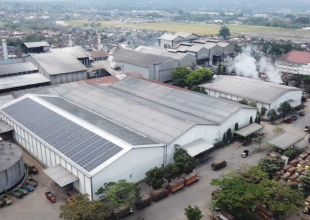
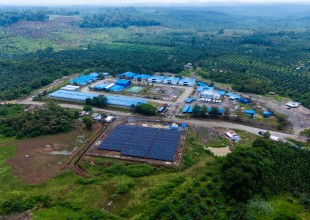
The use of solar energy systems in mining areas is becoming increasingly relevant because it addresses several major needs at once, from reducing diesel dependence and improving operational cost efficiency to strengthening energy supply resilience in remote locations. With the support of battery energy storage systems, solar energy can also become a more adaptive solution for the dynamic operational demands of mining sites.
“An effective green mining strategy must consider mining operations as a whole. That is why implementation needs to be tailored to the specific needs of each site. The integration of solar energy, energy storage, and monitoring systems is essential so mining companies can reduce emissions while maintaining operational efficiency and continuity,” said Jefferson Kuesar, CEO of SUN Energy.
Beyond power generation, SUN also sees the electrification of operational fleets as the next strategic step in encouraging lower-emission mining operations. Given that mobility is one of the key components in the mining operational chain, the transition toward electric vehicles can deliver a significant impact, both environmentally and in terms of operational efficiency.
“Fleet electrification should be viewed as part of a broader operational transformation. Its implementation must be adapted to the characteristics of each mining site, including vehicle type, operational routes, intensity of use, and charging infrastructure readiness. When designed properly, electrification can help mining companies reduce emissions, improve cost efficiency, and create a more modern and measurable operational system,” said Karina Darmawan, CEO of SUN Mobility.
Looking ahead, the transformation toward green mining will depend not only on technological readiness, but also on strong collaboration among all stakeholders. Through an integrated approach, SUN is committed to supporting Indonesia’s mining sector in building operations that are lower-carbon, more efficient, and still competitive.
In this context, SUN has begun implementing an integrated energy approach that includes solar power systems, battery energy storage systems (BESS), EV charging infrastructure, and operational fleet electrification as part of its solution to support the transition toward green mining in Indonesia.
Share