15 October 2026
A Decade of Advancing Clean Energy: SUN Enters a New Phase of Industrial Electrification in Indonesia
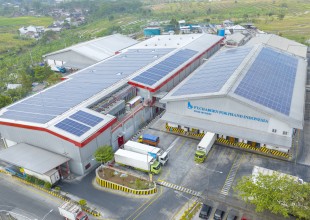
Jakarta, 15 October 2026 – Marking a decade in the clean energy industry, SUN has developed more than 500 megawatts (MW) of solar energy capacity across over 400 projects. This milestone reflects SUN’s role in expanding solar energy adoption across the commercial and industrial sectors, while laying the foundation for its next phase of growth as an electrification partner for industries in Indonesia.
Established in 2016, SUN has grown alongside increasing industrial demand for more efficient, lower-carbon, and reliable energy. Its portfolio spans Indonesia, Australia, Vietnam, and Thailand, serving sectors including mining, cement, fast-moving consumer goods (FMCG), logistics, paper, packaging, electronics, automotive components, and pharmaceuticals.
Beyond capacity milestones, this portfolio growth reflects the increasing adoption of clean energy as part of industrial strategies to improve efficiency and competitiveness. Based on estimated clean energy generation in 2026, SUN’s projects are expected to contribute to annual emissions reductions of approximately 244,549 tonnes of CO₂, equivalent to planting around 4.06 million trees.
“SUN’s first decade has demonstrated that the energy transition can advance alongside the industry’s need for efficiency, reliability, and competitiveness. As we enter our next decade, we aim to build on this experience through increasingly integrated electrification systems, connecting clean energy generation with its use across our customers’ operations,” said Jefferson Kuesar, Director of Power at SUN.
From Solar Energy to Integrated Electrification
As it enters its next phase, SUN is expanding beyond solar energy development to deliver more integrated electrification systems. Its solutions encompass solar power, energy storage and management systems, electric vehicles, charging infrastructure, and digital systems that support energy and fleet management.
This expansion primarily targets sectors with substantial energy needs and intensive operations, including mining, plantations, logistics, manufacturing, industrial estates, and FMCG.
For fleet electrification, each deployment is designed around the customer’s operational requirements, including vehicle types, route patterns, travel distances, terrain, charging needs, and on-site energy availability.
Through its Mobility offering, SUN provides electric vehicles, charging infrastructure, financing or leasing arrangements, vehicle maintenance, and monitoring through a Fleet Management System.
A SUN case study involving an FMCG distributor in Greater Jakarta indicates that electric trucks operating on routes of approximately 50 kilometres, between 8 a.m. and 5 p.m., could reduce energy costs by up to 83.6% per trip and lower total ownership and operating costs by approximately 15%. These calculations are based on the availability of grid electricity and the customer’s operating patterns.
“Fleet electrification needs to be designed as part of the wider operating system, going beyond vehicle replacement. Charging infrastructure, financing, maintenance, and energy supply must be planned together to ensure an effective transition with measurable outcomes,” said Karina Darmawan, Director of Mobility at SUN.
Expanding Large-Scale Solar Development to Support Indonesia’s 100 GWp Vision
Alongside its expansion into industrial electrification, SUN is strengthening its development of larger-scale solar projects as part of its long-term growth strategy.
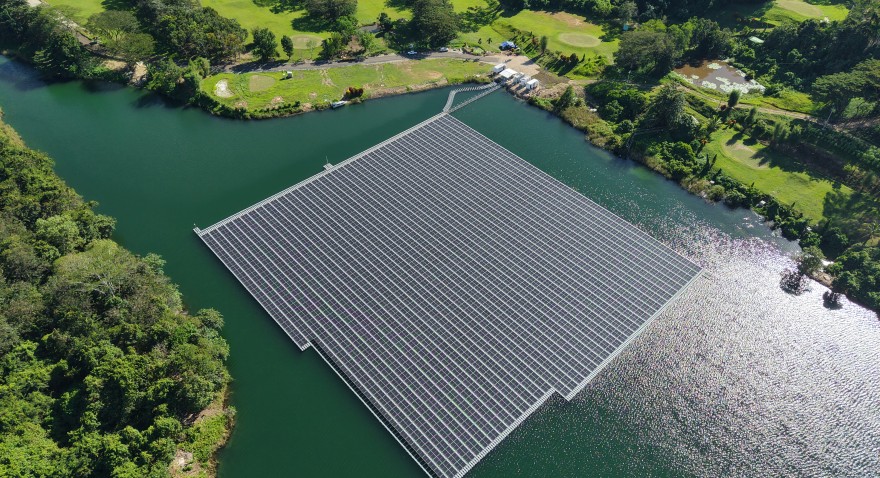
Indonesia has an estimated solar energy potential of approximately 3,200 GWp, offering significant opportunities for commercial and industrial installations as well as large-scale projects. SUN currently has a solar project pipeline exceeding 40 MWp across several regions in Indonesia, with these projects still under development.
SUN is also expanding its role as an Independent Power Producer (IPP) to support the long-term development of clean energy assets. This move is expected to increase private-sector participation in expanding national renewable energy capacity while supporting Indonesia’s vision to develop 100 GWp of solar power.
Entering the Next Decade
Looking ahead, SUN will strengthen the development of clean energy and electrification assets across strategic sectors. By integrating solar power, energy storage, energy management systems, fleet electrification, charging infrastructure, and digital systems, SUN aims to help customers improve operational efficiency, strengthen energy resilience, and reduce dependence on fossil fuels.
To accelerate implementation, SUN will continue collaborating with the government, regulators, PLN, industry associations, industrial estate operators, financial institutions, technology partners, suppliers, and engineering, procurement, and construction (EPC) contractors.
With a decade of experience developing clean energy projects, SUN enters its next phase of growth by strengthening its role as an industrial electrification partner, contributing to greater industrial competitiveness and accelerating Indonesia’s energy transition.
Share