04 June 2026
The Healthcare Industry Moves Toward Green Manufacturing, Integrated Healthcare Indonesia Adopts Solar Energy System
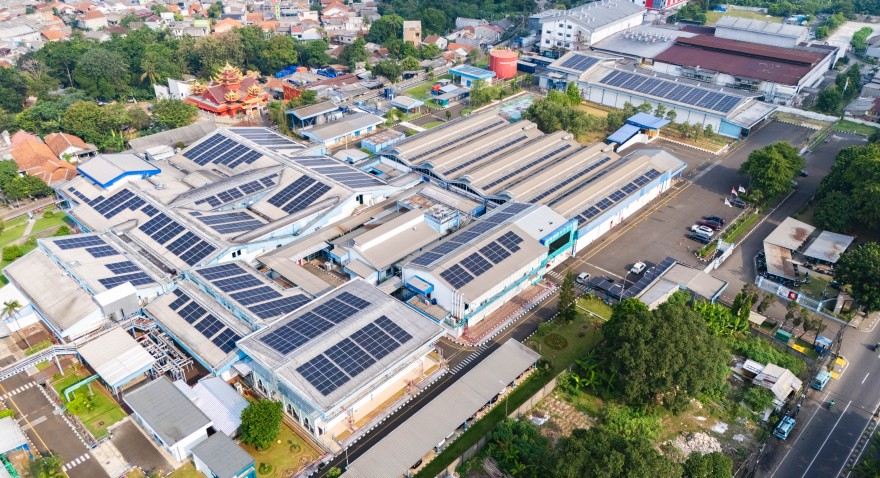
Jakarta, 4 Juni 2026 — The global healthcare industry is now facing a new challenge: maintaining product quality and safety while reducing the carbon footprint across its manufacturing supply chain. Amid growing sustainability expectations from global markets and the need to maintain long-term operational efficiency, PT Integrated Healthcare Indonesia (IHI) has taken a strategic step by adopting solar energy at its manufacturing facility in East Jakarta.
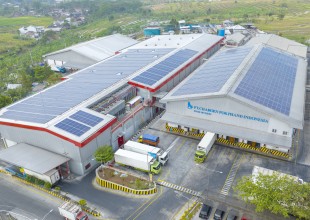
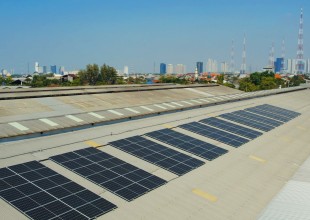
PT Integrated Healthcare Indonesia (IHI) is part of Kenvue, Inc. operating in Indonesia, with a commitment to delivering quality healthcare products to the public. IHI manufactures and holds distribution permits for a range of trusted products such as Mylanta, Tylenol, Benadryl/Bactidol, Imodium, Daktarin, and Motilium — serving not only domestic market demand, but also contributing to global public health through exports to various countries, including Korea, the Philippines, Thailand, and Australia. Together with SUN Energy as its integrated renewable energy solutions provider, IHI has been operating a 777.98 kWp On-Grid Solar Power System since February 2026.
This initiative demonstrates how the healthcare manufacturing sector is beginning to view clean energy not merely as an environmental effort, but as part of a long-term business strategy to build operations that are more efficient, resilient, and prepared for future industry demands. Unlike many other sectors, the healthcare industry has limited flexibility to lower operational standards in pursuit of energy efficiency. Activities such as cleanrooms, laboratories, HVAC systems, cold-chain logistics, water treatment, as well as production and packaging facilities require high and stable energy consumption to maintain product quality. For this reason, the energy transition in the healthcare sector requires solutions that can preserve operational reliability while supporting corporate sustainability goals.
The On-Grid solar installation at IHI’s facility is projected to generate 1,012,503 kWh of energy annually and reduce carbon emissions by 787.73 tons of CO2 per year, equivalent to planting more than 13,000 trees. In addition to supporting emissions reduction, the use of solar energy also helps the industry maintain more manageable long-term energy costs while reducing dependence on fluctuations in conventional energy prices.
Teerasak Lueuwirat, President Director of PT Integrated Healthcare Indonesia, said:
“The adoption of solar energy through solar panel installation is a concrete step in supporting carbon emissions reduction while also improving long-term operational energy efficiency. At the same time, the implementation of a digitalization system based on real-time monitoring, which has been in place since the beginning of this year, strengthens our capabilities in improving precision, visibility, and speed in operational decision-making.”
He added that the use of solar energy at the IHI facility supports a range of operational needs, from cooling systems, water treatment, and lighting, to production facilities and warehousing.
Jefferson Kuesar, CEO of SUN Energy, said that the healthcare sector is one of the industries with the most critical energy requirements, as its operations are governed by high standards of quality and reliability.
“For that reason, the energy transition in this sector requires an approach that focuses not only on decarbonization, but also on energy resilience and long-term operational efficiency. We are seeing more industries begin to view renewable energy not merely as an environmental initiative, but as part of business strategy and global competitiveness,” said Jefferson.
The use of solar power at IHI’s facility illustrates how energy transformation in Indonesia’s manufacturing sector is beginning to move beyond compliance and toward long-term business strategy. Clean energy is increasingly becoming an important part of building industries that are more competitive, efficient, and ready to respond to evolving global market demands.
Share