10 March 2025
The First and Largest Containerized Microgrid Battery Energy Storage System for Solar Energy Innovation in Indonesia
Containerized Solar PV, BESS, and Microgrid Systems
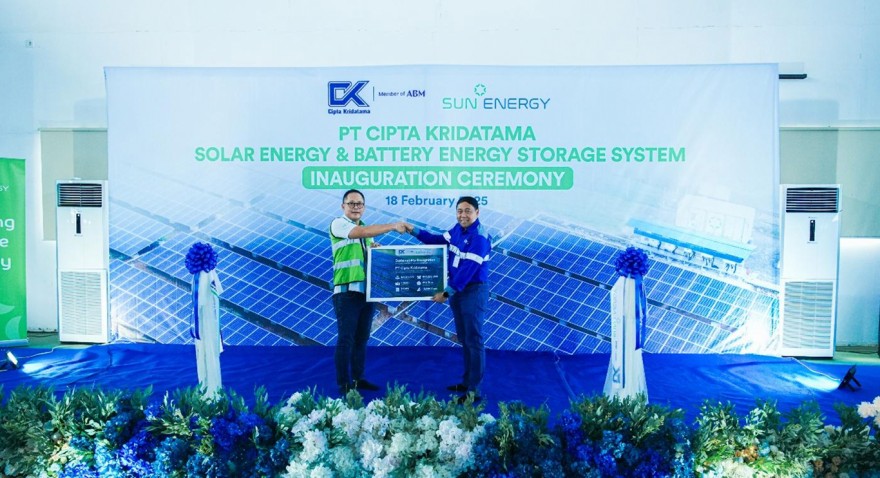
Jambi, February 18, 2025 – PT Cipta Kridatama (CK), a subsidiary of PT ABM Investama Tbk (ABMM), in collaboration with SUN Energy, inaugurated a solar photovoltaic (PV) power system integrated with a containerized Battery Energy Storage System (BESS) in Jambi, Indonesia.
The project combines a 643.8 kWp solar PV system with a 1 MWh battery energy storage system housed in a 20-foot container. Through a containerized microgrid configuration, the system is designed to provide an independent electricity supply for supporting facilities at a mining operation that is not connected to the national power grid.
This initiative reflects PT Cipta Kridatama's commitment to improving operational efficiency while advancing sustainability and Environmental, Social, and Governance (ESG) initiatives across the ABM Group.
What Are Containerized BESS and Microgrid Systems?
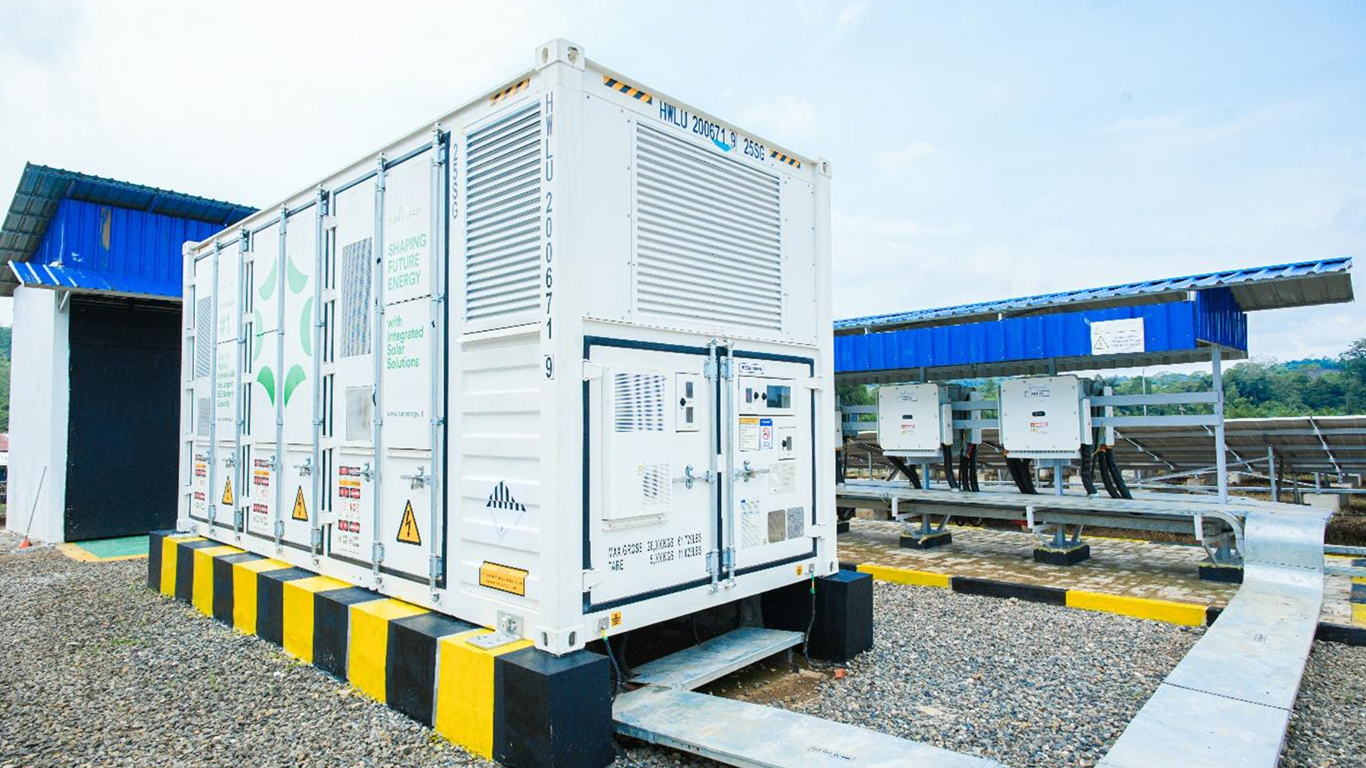
A Battery Energy Storage System (BESS) stores electrical energy in batteries for use when needed. Within a microgrid, BESS can operate alongside power generation sources such as solar PV and a control system to help manage electricity supply and consumption across a local network.
A microgrid is a localized electricity system that integrates power generation, energy storage, and control technologies to serve specific energy needs. Depending on its configuration, a microgrid can operate independently from the main electricity grid or remain connected to it.
In a containerized configuration, the battery storage system and its supporting equipment are housed in a modular enclosure. This approach offers installation flexibility and can support deployment in various industrial environments, including remote mining locations.
How Solar PV, BESS, and Microgrids Work Together
Integrating solar PV, BESS, and microgrid technology allows electricity generated from sunlight to be used directly or stored for later use.
The system generally operates through the following stages:
- Solar Panels Generate Electricity. Photovoltaic modules capture sunlight and convert it into direct current (DC) electricity.
- Inverters Convert Electrical Power. Power conversion equipment converts DC electricity into alternating current (AC) to supply electrical equipment and facilities that operate on AC power.
- BESS Stores Energy. When energy is available for storage, the battery system charges according to its operating conditions, available capacity, and energy management strategy.
- Stored Energy Is Supplied When Needed. The battery can discharge stored electricity when solar generation decreases or when additional power is required to meet electricity demand.
- The Microgrid Control System Manages Operations. The control system coordinates power generation, energy storage, and electricity consumption to help maintain the balance between supply and demand within the local network.
Through this integrated approach, solar PV and BESS complement each other to support electricity supply within a localized power system.
However, system reliability depends on several factors, including system design, battery capacity, solar energy availability, and electricity demand.
Main Components of the System
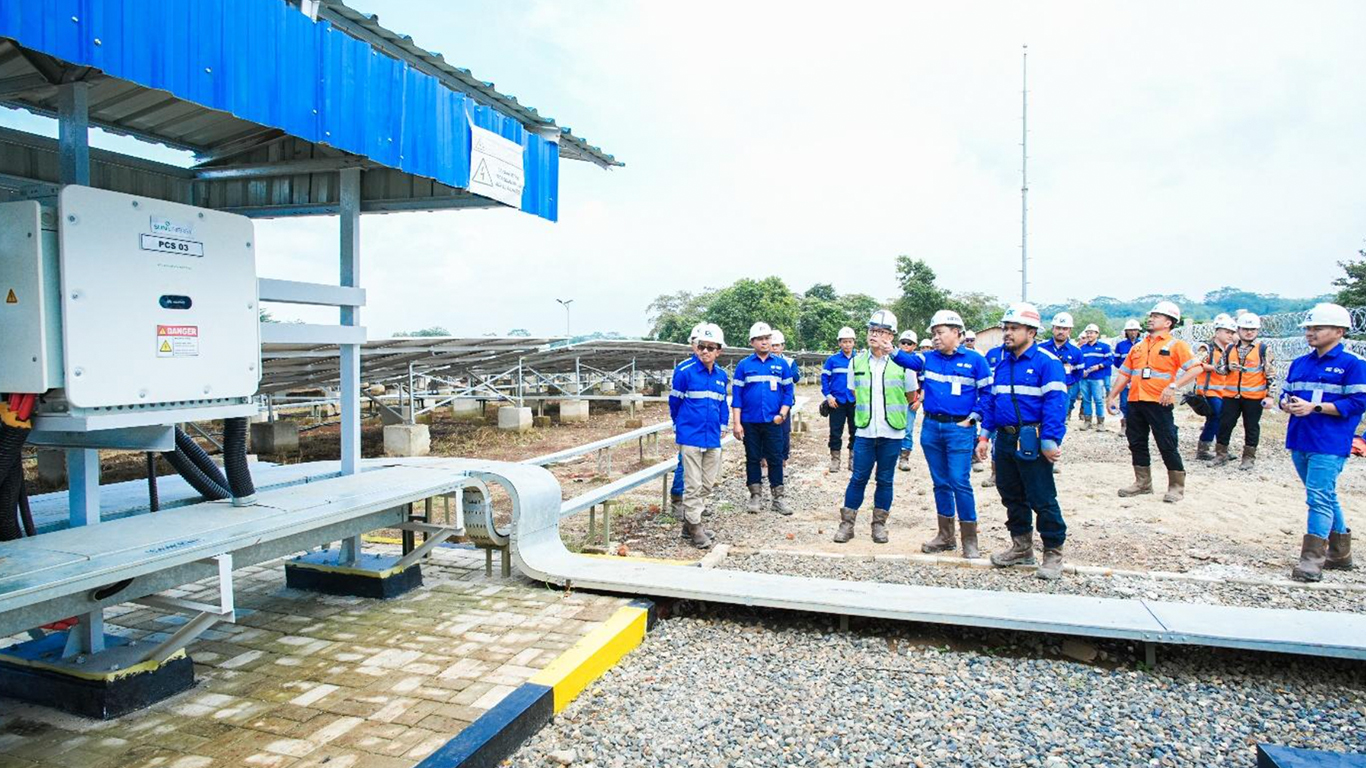
A solar PV system integrated with BESS and microgrid technology consists of several components responsible for electricity generation, storage, conversion, distribution, and monitoring.
The main components include:
| Component | Function |
|---|---|
| Solar PV Modules | Convert sunlight into DC electricity. |
| Battery Energy Storage System (BESS) | Store electrical energy for use when needed. |
| Inverters and Power Conversion Systems | Convert and manage electrical power according to the system configuration. |
| Microgrid Control System | Coordinate electricity generation, storage, and distribution within the local network. |
| Electrical Protection Devices | Help protect the system against electrical faults and support safe operation. |
| Monitoring System | Track energy generation, battery conditions, and overall system performance. |
| Container and Supporting Equipment | House battery storage equipment and related components in a modular configuration. |
Each component must be selected and designed according to the required power capacity, site conditions, operational needs, and applicable electrical safety standards.
Benefits for Remote and Off-Grid Locations
Solar PV systems integrated with BESS and microgrid technology can provide an alternative electricity solution for locations without access to the national power grid or facilities that require an independent power supply.
Key benefits include:
- Reduced Dependence on the Main Power Grid. Off-grid configurations allow facilities to receive electricity from locally installed generation and energy storage systems designed for their specific requirements.
- Optimized Solar Energy Utilization. Electricity generated by solar PV modules can be consumed directly or stored in batteries for later use.
- Support for Remote Industrial Operations. Integrated solar PV and battery systems can help meet the electricity needs of supporting facilities at industrial and mining sites.
- Flexible Installation and Deployment. Containerized energy storage systems offer a modular approach that can simplify installation planning and accommodate different site requirements.
- Support for Lower Operational Emissions. Solar electricity can potentially reduce reliance on fossil fuel-based energy sources, depending on the system configuration and operating conditions.
These benefits should be evaluated through technical planning, energy demand analysis, and system performance simulations to ensure that the selected solution meets the requirements of each location.
Project Implementation: SUN Energy and PT Cipta Kridatama
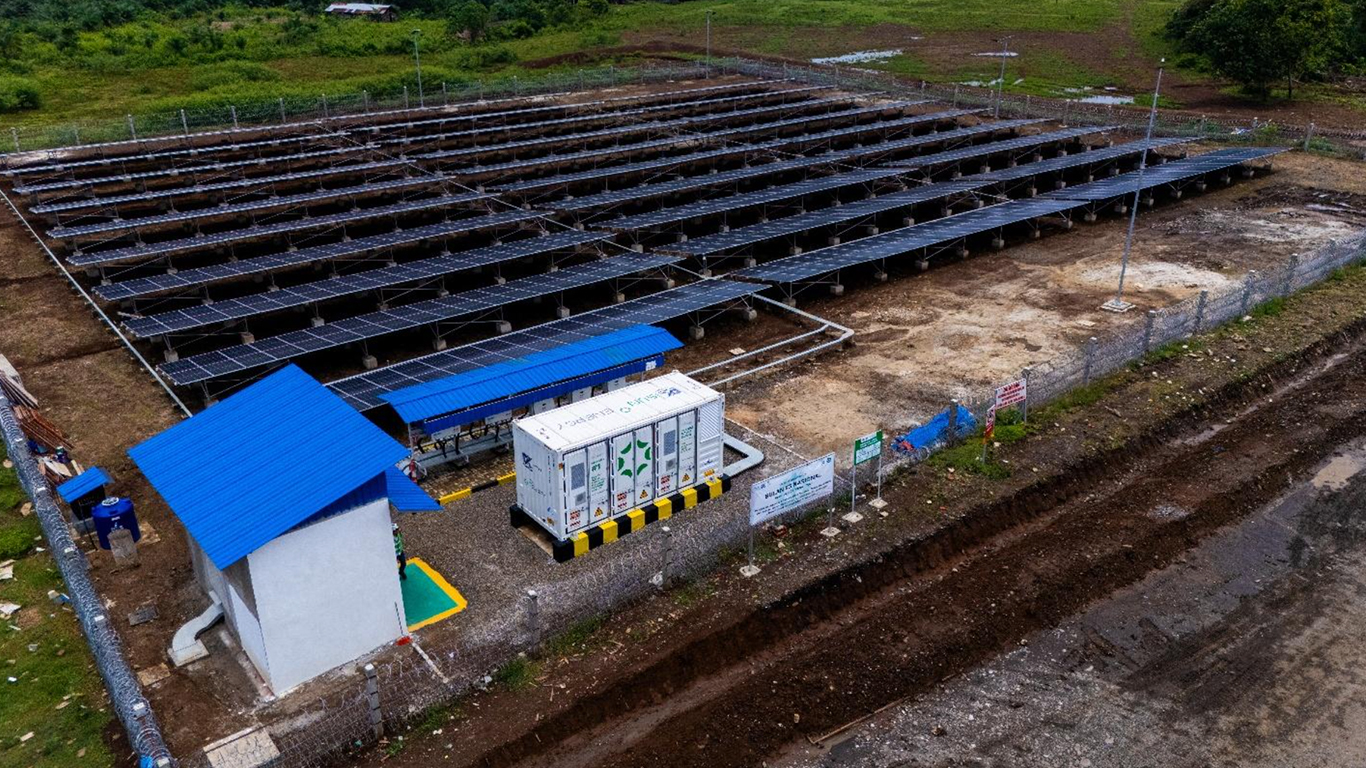
An example of containerized solar PV and BESS implementation is the project developed by SUN Energy in collaboration with PT Cipta Kridatama in Jambi, Indonesia.
Inaugurated on February 18, 2025, the project was developed to support independent electricity generation for facilities associated with mining operations.
The project specifications include:
| Project Aspect | Details |
|---|---|
| Project Partners | PT Cipta Kridatama and SUN Energy |
| Location | Jambi, Indonesia |
| Solar PV Capacity | 643.8 kWp |
| Battery Storage Capacity | 1 MWh |
| Battery Container Size | 20 feet |
| System Configuration | Off-grid |
| Construction Period | Four months |
| Electricity Applications | Employee accommodation, sports facilities, mosque, and 24-hour medical clinic |
The solar PV system generates electricity to support facility operations, while BESS stores electrical energy and supplies it when required.
The containerized configuration also offers flexibility for industrial energy infrastructure development. Its modular design can support future capacity adjustments or system expansion, subject to technical feasibility and operational requirements.
Supporting Energy Efficiency and Sustainability Commitments
According to information released during the project inauguration, the solar PV and Containerized Battery Energy Storage System (CBESS) project is projected to generate more than 849,000 kWh of clean electricity annually and reduce carbon emissions by approximately 660 metric tons of CO₂ per year.
The estimated carbon reduction was also presented as equivalent to planting more than 10,900 trees. These figures represent project projections rather than independently verified operational results.
Meidi Wibowo, President Director of PT Cipta Kridatama, highlighted the project's role in supporting sustainable mining practices and the ABM Group's broader ESG initiatives.
Meanwhile, Oky Gunawan, Chief Sales Officer of SUN Energy, emphasized the importance of technological collaboration with Huawei in developing efficient and reliable energy solutions for industrial operations in remote locations.
Through this project, SUN Energy and PT Cipta Kridatama demonstrate how integrating solar PV, battery energy storage, and microgrid technology can support more sustainable industrial operations.
The implementation also highlights opportunities for wider solar energy adoption, particularly in industrial facilities that require independent and flexible electricity solutions tailored to local operating conditions.
Share