27 November 2025
Solar Energy Drives Green Mining Transformation in Indonesia
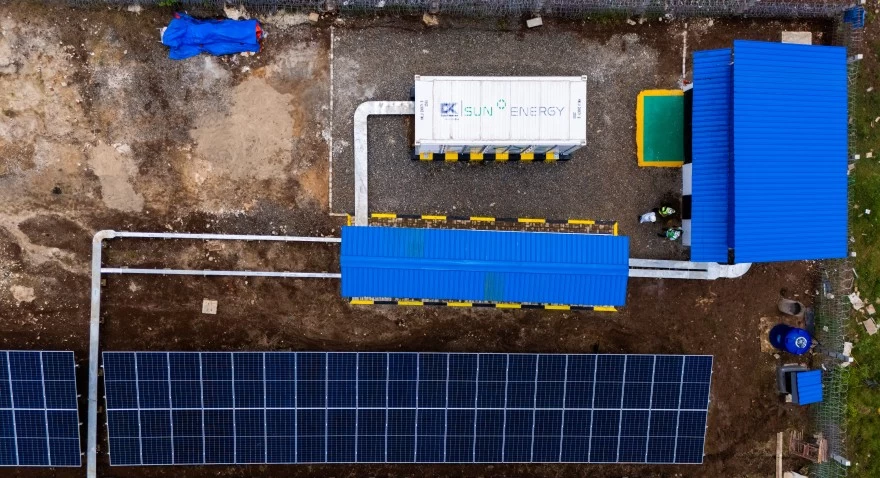
The global shift toward green mining has become a key driver of transformation in the mining sector, driven by the need for greater energy efficiency and significant carbon emission reductions. This approach positions solar energy systems as a critical solution for enabling mining operations that are efficient, stable, and sustainable.
In Indonesia, this transition aligns with the government’s commitment to achieving Net Zero Emission 2060, and supports the implementation of good mining practice as mandated by Law No. 3 of 2020 on Mineral and Coal Mining. The regulation underscores the importance of environmental management, mine reclamation and post-mining responsibilities, and sustainability as part of corporate social and environmental obligations.
As a solar project developer for the industrial sector, SUN Energy sees significant opportunities to implement solar energy systems in mining operations, supporting national decarbonization targets and ensuring reliable electricity supply in remote mining areas with limited access to grid power.
Solar Energy as the Foundation of Mining Efficiency and Decarbonization
Mining is known as one of the most energy-intensive industries, often operating in remote locations far from national grid infrastructure. In such conditions, the need for efficient and reliable energy sources becomes critical. The combination of solar energy systems and Battery Energy Storage Systems (BESS) emerges as a strategic solution to deliver stable power supply, reduce operational costs, and minimize carbon emissions.
According to the National Renewable Energy Laboratory (NREL), energy costs account for 15-40% of total mining operational expenses, especially in regions relying heavily on diesel generators. By integrating solar power with battery storage, mining companies can reduce fossil fuel consumption, improve energy efficiency, and ensure reliable electricity availability. A more stable power system also helps reduce equipment damage risks and extend the lifespan of heavy machinery and production assets.
IRENA reports that utility-scale solar electricity generation costs have fallen to USD 0.043 per kWh, approximately 41% cheaper than the most efficient fossil-based power plants. This cost decline has made solar power increasingly competitive for the mining sector, supporting long-term sustainability and efficiency goals.
Beyond cost optimization, solar energy plays a vital role in reducing operational carbon emissions. By integrating renewable energy, mining companies can significantly reduce Scope 1 and Scope 2 emissions. Several global mining companies that shifted to renewable power have achieved 30-38% reductions in operational emissions, reflecting the growing global adoption of green mining practices in modern mining operations.
Sustainability Solutions Shaping the Future of Green Mining
Green mining requires an integrated approach that combines renewable energy, electrification, and efficient resource management. The combination of solar energy systems, BESS, and digitalized operational systems forms the foundation of energy-efficient and low-carbon mining.
Through its Sustainability-as-a-Service approach, SUN Energy, together with its group entities: SUN Terra (Solar & BESS technologies), SUN Mobility (Fleet-as-a-Service), and NIRA (sustainable water management), delivers integrated sustainability solutions for the mining industry.
These integrated solutions represent a new direction in modern mining, promoting greener, more efficient operations aligned with Indonesia’s industrial decarbonization agenda. Solar energy systems with BESS ensure stable electricity supply, even in remote mining regions beyond national grid reach. Meanwhile, fleet electrification can reduce diesel fuel costs by up to 40%, and digital monitoring systems enable real-time energy consumption tracking to support operational optimization and asset reliability.
A study by McKinsey & Company shows that mine electrification combined with renewable energy can reduce energy costs by 40-70% and carbon emissions by 60-80%, especially in sites previously reliant on fossil fuels. These findings confirm that clean energy integration is not just part of a decarbonization agenda, but a long-term efficiency strategy for global mining operations.
Share