26 November 2025
Industrial Sector Remains the Largest Energy Consumer Driving the Adoption of Solar Energy in Indonesia
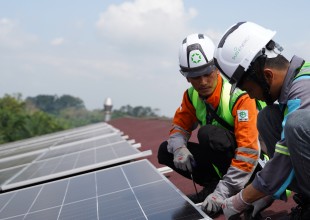
The industrial sector remains the largest contributor to national energy consumption. Data from the Ministry of Energy and Mineral Resources (ESDM) shows that the sector accounts for 45.94% of Indonesia’s total energy demand. With a high dependence on fossil fuels, energy efficiency has become a strategic necessity for industrial estates to remain competitive, and SUN Energy plays a key role as a sustainability solution provider, driving the adoption of solar energy systems (PLTS) to reduce emissions and lower operational costs.
As of November 2025, SUN Energy has installed more than 220 megawatt-peak (MWp) of solar energy systems across various locations in Indonesia, including major industrial estates such as Karawang International Industrial City (KIIC) and Jababeka Industrial Estate. This track record reinforces SUN Energy’s role as a strategic partner in helping industrial estates transition toward more efficient and low-carbon operations.
With the rising demand for clean energy in the industrial sector, the transformation of industrial estates toward more sustainable models is becoming a regional trend, not only in Indonesia but also across Southeast Asia. In Thailand, the Eco-Industrial Town (EIT) program promotes integrated water, energy, and waste management under the Smart Eco framework. Meanwhile, in Vietnam, the government targets 50% of industrial parks to be classified as green zones by 2030.
Solar Energy as the Foundation of Green Industrial Estates
Solar energy is now one of the main foundations in transforming industrial estates toward decarbonization. According to the International Renewable Energy Agency (IRENA), the global cost of solar power generation has reached USD 0.043/kWh, around 41% cheaper than the most efficient fossil-based power plants. This downward cost trend makes solar energy not only environmentally friendly, but also economically practical for industrial zones.
In Indonesia, electricity demand in industrial estates continues to increase alongside the growth of the manufacturing and logistics sectors. With average solar irradiation of 4.8 kWh/m² per day in most regions, solar energy becomes an ideal solution to meet clean energy needs. Its application is flexible, whether on factory rooftops, warehouses, or open land, depending on tenant needs and electricity capacity.
Beyond cost efficiency, solar energy adoption helps industrial estates strengthen their sustainability reputation and meet international Environmental, Social, and Governance (ESG) standards. With rising demands for environmental transparency, renewable energy use has become an important indicator in ESG evaluation.
Collaboration Accelerates the Transition to Green Industrial Estates
Energy transition in industrial estates cannot be achieved alone. Collaboration between estate operators, tenants, and energy partners is essential to ensure meaningful progress toward sustainability. This collaboration is not only about investment, but also about sharing infrastructure and knowledge to optimize clean energy usage across the estate.
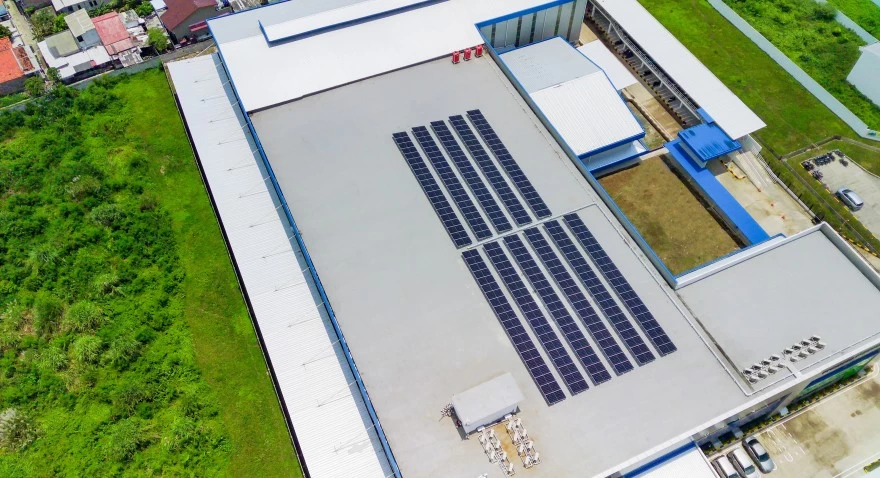
A report from the Center for Global Sustainability notes that 21 industrial estates in Indonesia have implemented or are planning to implement solar energy as part of their clean energy strategy. One example is Jababeka Industrial Estate, where SUN Energy developed a 1.8 MWp solar project serving various tenants, including building materials manufacturing, automotive components, pharmaceuticals, inspection laboratories, and packaging facilities. This project has the potential to serve as a pilot area for low-carbon industrial development and demonstrates how solar energy can be integrated collectively within industrial ecosystems.
Such collaboration creates broader impacts beyond cost savings. Industrial estates adopting clean energy become more attractive to new tenants and investors who prioritize ESG performance. At the same time, the integration of other sustainability solutions—such as SUN Mobility for fleet electrification and NIRA for sustainable water management—can help industrial estates reduce carbon footprints while improving operational efficiency.
Although challenges remain, such as upfront investment and quota limitations for solar capacity, cross-sector collaboration shows promising momentum. Supported by evolving regulations and declining solar technology costs, collaboration within industrial estates can become a key driver for national energy independence and accelerate Indonesia’s journey toward Net Zero Emission 2060.
Share