05 January 2026
Welcoming 2026, SUN Energy Strengthens Integrated Business Solutions to Support Industrial Decarbonization
Tag
Jakarta, 5 January 2026 — Entering early 2026, the transformation of industry toward low-carbon operations is no longer an option, but a prerequisite for maintaining competitiveness in the global market. The full implementation of the European Union’s Carbon Border Adjustment Mechanism (CBAM) this year represents one of the most immediate drivers pushing Indonesian industries to accelerate measurable and sustainable decarbonization efforts.
Responding to this dynamic, SUN Energy reaffirmed its business direction for 2026 by strengthening integrated sustainability solutions for the industrial sector. Throughout 2025, SUN Energy focused its business development on enhancing technical, operational, and digital capabilities to support industries in managing energy, emissions, and operational efficiency in a more systematic, multi-site, and long-term manner.
Although renewable energy adoption in the industrial sector continues to show positive growth, reflected in PLN data recording 11,392 rooftop solar customers with a total installed capacity of approximately 772.9 MW, many decarbonization initiatives are still implemented in silos at individual facilities. Limited integration of clean energy systems across production sites, the absence of centralized energy data monitoring, and operational complexity in multi-site companies often make long-term emission reduction efforts difficult to manage sustainably.
This condition prompted SUN Energy to develop a more structured approach. Leveraging its global experience in large-scale solar project development, SUN Energy has operated 420 MW of solar energy projects across four countries, generating more than 650 million kWh of clean electricity and contributing to a reduction of 506 million kilograms of CO₂ emissions, equivalent to planting 5.9 million trees per year.
In Indonesia, SUN Energy has developed industrial-sector solar projects with a total installed capacity of 240 MW, positioning the company as one of the largest solar energy developers in the country. The strongest growth has been recorded in energy-intensive sectors such as cement, fast-moving consumer goods (FMCG), paper, plastic packaging, electronics, and automotive components. Geographically, solar energy adoption among SUN Energy’s customers is concentrated in West Java, East Java, and Banten, Indonesia’s main manufacturing hubs.
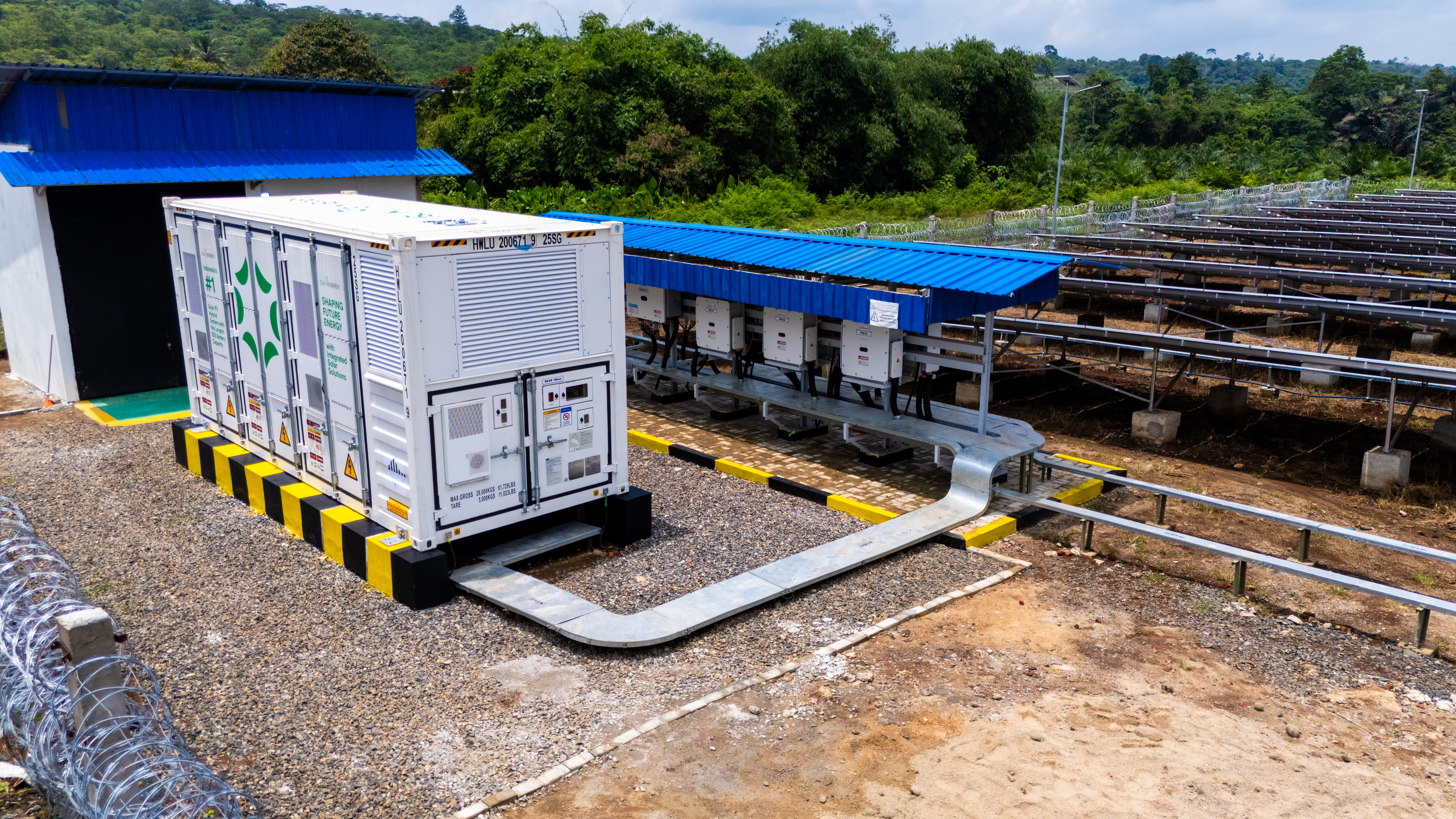
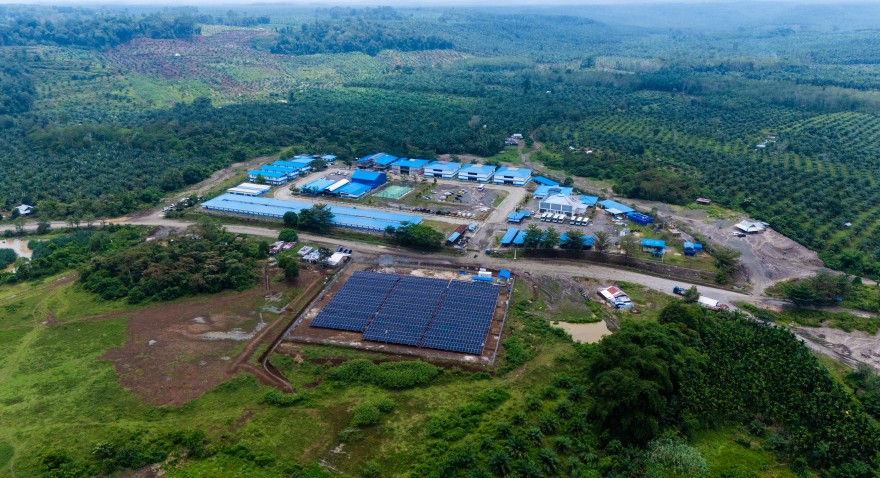
SUN Energy’s Solar Project with CBESS at PT Cipta Kridatama
As part of strengthening its technological capabilities, SUN Energy marked an important milestone in 2025 with the successful implementation of a Containerized Battery Energy Storage System (CBESS) in the mining sector. This project represents Indonesia’s first CBESS implementation, while also signaling SUN Energy’s expansion from solar power generation into integrated energy systems designed to meet the demands of industries with high and fluctuating loads.
The deployment of containerized BESS enables optimized renewable energy utilization, improved power supply reliability, and reduced dependence on fossil fuels in mining operations. This success opens opportunities to replicate similar solutions across other critical energy-demand sectors, including heavy manufacturing, smelters, and large-scale integrated industrial estates.
Building on its extensive experience in managing various types of solar projects, SUN Energy will further expand collaboration with industrial estates. To date, the company has installed solar systems for more than 20 tenants across three strategic industrial zones: Karawang International Industrial City (KIIC), Greenland International Industrial Center (GIIC), and Jababeka Industrial Estate through collaboration with Bekasi Power. The total installed capacity across these industrial zones exceeds 20 MW, serving a wide range of industrial and commercial sectors.
SUN Energy’s CEO, Emmanuel Jefferson Kuesar, emphasized that technology development will be a key driver in accelerating industrial decarbonization going forward. “Entering 2026, our focus is not only on solar energy projects, but also on developing energy storage technologies such as Battery Energy Storage Systems (BESS), particularly for industries with high energy demand and complex operations such as mining, heavy manufacturing, and other high-potential sectors. Integration between generation, storage, and energy management systems is a critical foundation to ensure supply reliability while optimizing emission efficiency,” he said.
He added that cross-ecosystem collaboration will continue to expand. “We are opening closer collaboration with industrial estates to build integrated energy systems, including integration with operational fleet electrification and electric vehicle infrastructure. This approach allows industries to manage energy and emissions holistically, from energy sources and storage to mobility, as part of a long-term business strategy.”
Looking ahead to 2026, SUN Energy will continue strengthening its role in the industrial sector while expanding its involvement in the Independent Power Producer (IPP) segment to support the development of larger-scale solar projects. This step aims to enhance SUN Energy’s contribution to the national energy mix and broaden the reach of its solar energy solutions.
In line with this expansion, SUN Energy is also strengthening its business ecosystem through the integration of SUN Mobility, which focuses on transportation electrification and electric vehicle infrastructure, and SUN Terra, which specializes in the management and optimization of solar energy systems. This integrated ecosystem is designed to deliver comprehensive sustainability solutions covering energy, mobility, and resource management, supporting a more holistic approach to industrial decarbonization.
Share