18 December 2025
Industrial Decarbonization Becomes Increasingly Urgent, SUN Energy Strengthens Its Role Through Integrated Solutions
Tag
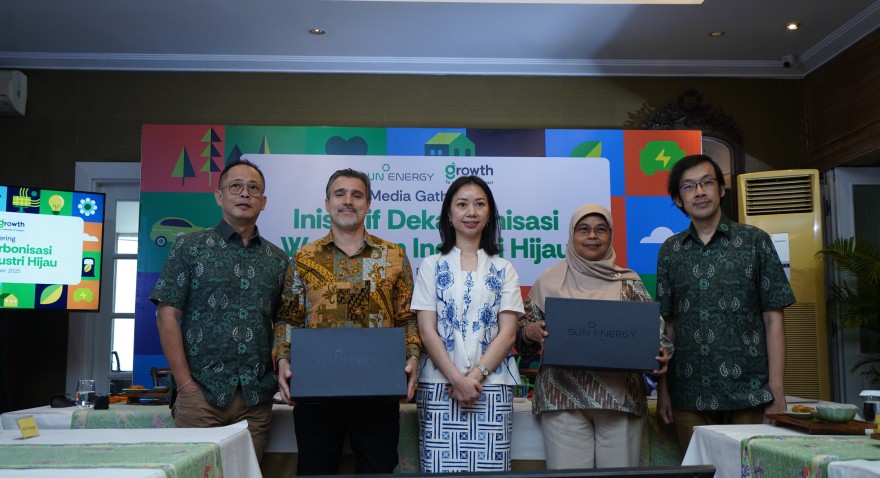
Jakarta, 18 December 2025 — Industrial decarbonization has become an increasingly urgent necessity for Indonesia’s manufacturing sector amid mounting regulatory pressure, global market demands, and the transformation of international supply chains. Indonesian industries are no longer expected merely to grow, but also to operate efficiently, with low emissions, and remain globally competitive. In response to these challenges, SUN Energy is strengthening its role in delivering integrated solutions to accelerate the implementation of the Green Industry Standard (Standar Industri Hijau/SIH) and enhance national industrial competitiveness.
This urgency is reflected in rising industrial energy consumption. Recent data shows that industrial electricity consumption grew 2.66% year-on-year, reaching a total volume of 1,165 gigawatt-hours (GWh). The industrial sector now accounts for more than 40% of national electricity consumption, making it a key determinant in the success of Indonesia’s energy transition and emission reduction agenda. At the same time, the sector is a major contributor to national greenhouse gas emissions. Various studies indicate that the energy and industrial sectors together account for over 50% of Indonesia’s total emissions, positioning industrial transformation as a critical pathway toward achieving Net Zero Emissions by 2060. In this context, accelerating clean energy adoption and SIH compliance has become essential to ensuring a sustainable and competitive industrial sector.
Green Industry Standards as a Competitiveness Instrument
The Indonesian government, through the Ministry of Industry, continues to promote the implementation of the Green Industry Standard (SIH) as a key instrument for industrial transformation. SIH governs not only energy efficiency and emission reduction, but also resource management, productivity, and supply chain sustainability.
To date, more than 150 companies in Indonesia have obtained SIH certification, a figure expected to grow alongside stronger national policy alignment, including linkages with programs such as PROPER, the National Medium-Term Development Plan (RPJMN), and Indonesia’s commitments under the Enhanced Nationally Determined Contribution (ENDC).
Global pressure is also intensifying. Indonesian industries face the implementation of the European Union’s Carbon Border Adjustment Mechanism (CBAM), increasing demands for product carbon footprint transparency, ESG requirements from global investors, and preparations for a national Emission Trading System (ETS). Within this landscape, SIH compliance has become a strategic prerequisite rather than merely a regulatory obligation.
Sri Gadis Pari Bekti, Head of the Industrial Decarbonization Team at the Green Industry Center of the Ministry of Industry, emphasized the importance of this transformation: “Decarbonizing the industrial sector is a fundamental prerequisite for achieving net-zero emissions by 2050, given the significant contribution of industrial activities to emissions. Through the development of a green industry ecosystem, supported by the availability of low-carbon energy and technologies, inclusive financing mechanisms, and integrated policies and regulations, the government is driving industrial transformation toward greater efficiency, competitiveness, and alignment with global low-carbon market demands.”
In line with government policy direction, renewable energy adoption in the industrial sector continues to show positive growth. According to data from the Ministry of Energy and Mineral Resources (ESDM), national rooftop solar capacity reached 495 MW as of June 2025.
Renewable Energy as the Foundation of Industrial Decarbonization
Within SIH implementation, the use of renewable energy, particularly solar energy systems, represents one of the most concrete and measurable steps. Solar energy is considered strategic because it can directly reduce emissions, improve energy cost efficiency, and enhance the resilience of industrial power supply.
As of 2025, SUN Energy operates more than 300 solar projects across Indonesia, with a total installed capacity exceeding 240 MW across more than 50 industrial sectors. These projects are estimated to generate 322.3 million kWh of clean electricity annually and reduce carbon emissions by approximately 250.8 million kilograms of CO₂e per year.
The most significant growth in industrial solar capacity among SUN Energy’s customers has been recorded in five key sectors: cement, FMCG, paper, packaging, electronics, and automotive components, industries characterized by high energy intensity and sustained efficiency demands. Geographically, solar energy utilization among SUN Energy’s customers is most concentrated in West Java, East Java, and Banten, which form the backbone of Indonesia’s manufacturing industry.
From Solar Energy to Sustainability-as-a-Service
To address the growing complexity of industrial challenges, SUN Energy positions itself not merely as a solar technology provider, but as an industrial transformation partner through an integrated sustainability solutions approach.
SUN Energy CEO E. Jefferson Kuesar stated that industrial decarbonization has now become a strategic imperative, “The industrial sector must transform to remain relevant and competitive, both nationally and globally. Pressure from regulations, markets, and supply chains is pushing industries to rapidly adopt sustainable practices by prioritizing low-emission operations. Starting from solar energy development, we have built an integrated solution ecosystem that enables industries to reduce emissions and improve operational efficiency, ranging from solar energy systems and energy storage to the electrification of operational vehicles.”
This approach is reflected in the development of the SUN business ecosystem, which includes industrial and commercial solar installations, Energy Storage Systems (ESS), sustainable water resource management, and electric fleet electrification. This model represents a shift toward Sustainability-as-a-Service, where sustainability is delivered as a comprehensive, measurable, and business-impact-oriented service.
Fleet Electrification as a Decarbonization Accelerator
As part of this ecosystem, SUN Mobility focuses on electrifying industrial vehicle fleets, particularly in sectors with high operational intensity such as mining and logistics. Through an end-to-end approach, covering technical assessments, operational simulations, vehicle selection, and flexible financing schemes, SUN Mobility enables industries to transition to electric fleets with more manageable risk and potential fuel cost savings of up to 85% compared to conventional diesel fleets.
Karina Darmawan, CEO of SUN Mobility, highlighted the importance of a contextual approach: “Industrial fleet electrification cannot be standardized. Each site has unique needs and challenges. That is why we act as a neutral integrator, matching vehicle types, technologies, and financing schemes to real operational conditions, allowing industries to transition toward low-emission operations in a gradual and sustainable manner.”
Tangible Impact for National Industries
One example of SIH implementation and industrial decarbonization is PT Indocement Tunggal Prakarsa Tbk, a strategic business partner of SUN Energy in the cement sector. The company has operated solar energy systems with a total capacity exceeding 71 MW across its production facilities in Citeureup, Cirebon, and Tarjun, all of which have obtained Green Industry Standard certification as part of the company’s comprehensive sustainability commitment.
Robert Sweigart, Head of CCC Indonesia Competence Center Cement at PT Indocement Tunggal Prakarsa Tbk, stated that renewable energy plays a critical role in the company’s sustainability strategy, “The transition to clean energy is part of our long-term commitment to improving operational efficiency and reducing environmental impact amid increasingly severe climate change. Solar energy adoption helps us manage energy consumption more efficiently while strengthening our readiness to meet various sustainability standards at both national and global levels. Together with SUN Energy, implementation began at a single site and was later expanded across multiple production facilities, as system performance, reliability, and measurable emission reduction impacts were proven.”
Looking ahead, the integration of clean energy with corporate sustainability strategies is expected to further enhance energy efficiency, deliver measurable emission reductions, and strengthen the global competitiveness of Indonesian industrial products. Through cross-sector collaboration and integrated solutions, SUN Energy encourages national industries to take proactive steps toward Green Industry Standards as a foundation for long-term competitiveness and meaningful contribution to Indonesia’s Net Zero Emissions 2060 target.
Share